Introduction to Wind CFD Analysis
Wind CFD Analysis is a powerful simulation method that predicts how wind interacts with buildings and outdoor spaces. It uses Computational Fluid Dynamics (CFD) to visualize wind patterns, airflow turbulence, and pressure changes at varying speeds and directions. This analytical method allows architects, engineers, and urban planners to optimize their designs for safety, comfort, and sustainability.
As urban environments become denser and high-rise architecture more common, ensuring safe pedestrian wind comfort has become critical. A building’s structure can unintentionally amplify wind speeds at ground level, causing discomfort or even danger for pedestrians. With wind CFD analysis, design flaws can be spotted and corrected before construction begins.
Why Pedestrian Wind Comfort Matters in Urban Planning
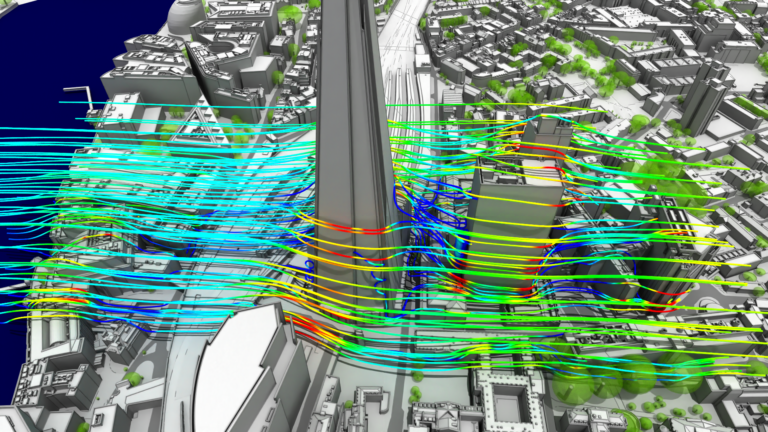
Pedestrian wind comfort is an essential metric in assessing urban livability. It refers to the level of comfort individuals experience due to wind conditions around buildings, parks, plazas, and streetscapes. Sudden gusts, vortices, or downdrafts can make areas unpleasant—or even hazardous—to navigate.
Microclimate conditions often shift when new structures alter wind flow patterns. This is why many city municipalities require wind studies as part of their planning permission process. Using CFD simulations allows professionals to understand and mitigate the tunnel effect, corner wind acceleration, and vortex shedding, all of which can make ground-level spaces difficult to use.
How CFD Simulations Work in Architectural Design
CFD simulations divide the physical space around a structure into millions of small cells. These cells are used to calculate the movement of air particles based on physics laws, such as the Navier-Stokes equations. The result is a detailed, 3D visual representation of airflow, turbulence, pressure zones, and wind speed.
Unlike traditional wind tunnel testing, which requires physical models, CFD is fully digital, faster, and highly customizable. This makes it a preferred choice in the early stages of architectural and urban design. Not only does CFD reduce costs, but it also improves precision, allowing multiple scenarios to be tested—including varied wind directions, seasonal shifts, and structural modifications.
Direction Wind Analysis: Industry Standard or Outdated?
Traditionally, 12 wind directions have been used to simulate a comprehensive wind flow scenario around a building. This approach has long been considered sufficient in both literature and practice. However, new studies suggest that expanding or refining the number of simulated directions can yield more precise wind comfort assessments.
As a result, modern engineering teams are beginning to question whether the 12-direction model captures all critical wind hazards. The uncertainty margin introduced by reducing or expanding direction sets must be analyzed to find the optimal balance between simulation time and accuracy.
Real-World Wind CFD Projects: Proven Expertise
Our extensive portfolio at SIMUDUBLIN demonstrates the successful application of wind CFD analysis across diverse sectors:
-
Gabala Stadium: Stadium airflow was simulated to assess comfort and ventilation strategies.
-
Çanakkale Terrestrial Broadcast Tower: Wind-induced structural stress and turbulence were modeled.
-
Portonovi Branded Villas: Microclimate optimization for high-end residential environments.
-
Folkart Towers & Özkardeş Skyscrapers: Tall building wind comfort and facade wind pressure testing.
-
Namık Kemal University: Campus airflow simulation and natural ventilation modeling.
-
Kıbrıs Arab Ahmet District: Heritage site airflow optimization for public safety.
These projects reveal the real-world impact of advanced CFD simulations, from improving HVAC performance to reducing environmental risks.
Tools and Technologies for Accurate Wind CFD Analysis
At Simu Dublin, we utilize cutting-edge software such as ANSYS Fluent, OpenFOAM, and SimScale to deliver accurate results. These tools allow for high-resolution meshing, transient simulations, and real-time scenario modeling.
-
OpenFOAM: Open-source and highly customizable, ideal for academic and complex simulations.
-
ANSYS Fluent: Offers advanced turbulence modeling (LES, RANS, etc.) and detailed visualization.
-
SimScale: Cloud-based and accessible, useful for collaborative engineering.
Combining these tools with local climate data and terrain mapping ensures site-specific accuracy.
Regulatory Compliance Through Wind Simulations
Many city governments mandate wind studies as part of the building permit process. These regulations are especially strict in regions with high pedestrian activity or extreme weather patterns. Wind CFD analysis offers a scientifically sound way to meet these criteria.
Simulations help prove that a design complies with local pedestrian wind comfort guidelines, such as Lawson’s criteria or NEN8100 standards. From university campuses to public squares and skyscrapers, CFD reports can be used as official documentation during planning applications.
Common Wind Hazards Identified in CFD Models
CFD analysis uncovers multiple types of wind hazards:
-
Vortex Shedding: Dangerous oscillating airflows behind structures.
-
Tunnel Effect: Acceleration between buildings or narrow passages.
-
Downdrafts: Vertical windflows near high-rise buildings that hit pedestrians directly.
-
Corner Accelerations: Sudden gusts forming around sharp corners.
Identifying these threats early allows for design interventions such as wind canopies, porous facades, baffles, or vegetation buffers.
Design Optimization Using Wind CFD Insights
Design teams use CFD insights to reshape structures for safer and more efficient interaction with the surrounding environment. Some optimization strategies include:
-
Adjusting building orientation to reduce wind load
-
Modifying podium heights to break downdrafts
-
Incorporating landscape features like trees and berms to reduce ground-level turbulence
-
Enhancing façade porosity for wind dispersal
These solutions not only improve comfort but also contribute to sustainability, energy savings, and LEED certification eligibility.
Future of Wind CFD Analysis in Smart Cities
As cities grow smarter, wind CFD analysis is evolving. Future innovations include:
-
AI-powered CFD simulations for faster predictive modeling
-
Sensor-integrated models that use real-time data for adaptive response
-
Digital twins that simulate live airflow conditions in urban areas
-
Climate-resilient planning, preparing cities for more frequent wind extremes due to climate change
Smart city planning requires a dynamic understanding of airflows, and CFD will be central to designing adaptable, comfortable urban spaces.
FAQ Section
1. What is Wind CFD Analysis in Architecture?
Wind CFD Analysis uses fluid dynamics simulations to study how air moves around buildings, ensuring safety, comfort, and energy efficiency.
2. How Does Wind CFD Analysis Improve Pedestrian Comfort?
It identifies wind hazards like downdrafts and tunnel effects early in design, allowing mitigation through form changes or landscaping.
3. Why Is 12-Direction Wind Modeling Standard in CFD?
Twelve directions cover prevailing wind scenarios but may lack precision for complex sites. More directions offer better accuracy.
4. Can CFD Replace Wind Tunnel Testing?
Yes, especially in early-stage design. CFD is faster, more flexible, and cost-effective, but both may be used for high-stakes projects.
5. Is Wind CFD Required for Building Permits?
In many urban areas, yes. Cities often mandate wind studies, especially for tall or dense developments near public spaces.
References:
GABALA STADYUMU, SENSO ENGINEERING, ÇANAKKALE KARASAL YAYIN KULESİ, SENSO ENGINEERING, PORTONOVİ BRANDED VİLLAS, İNTAÇ MÜHENDİSLİK, FOLKART KULELERİ VE ÖZKARDEŞ GÖKDELENLERİ, VİLTUR VİLLASARAY, SOĞUK HAVA DEPOSU HAVALANDIRMA, NAMIK KEMAL ÜNİVERSİTESİ, ESP Deprem ve İç Akış Analizleri, İSKEN TERMİK SANTRALİ, KIBRIS ARAB AHMET MAHALLESİ, İSTANBUL ÜNİVERSİTESİ, YANGIN BARİYERİ HESAPLARI, NORMTEKNİK, YOLCU GEMİSİ HVAC HESABI, RINA, FAN AKUSTİK HESABI, HATTAT HOLDING, GAZ KANALI İÇ AKIŞ ANALİZİ, YATAĞAN TERMİK SANTRALİ, PSR-Reflektor Rüzgar ve Yapısal Analizi, SVS TELEKOM.