Introduction to Finite Element Analysis
Finite Element Analysis (FEA) is a cutting-edge computational technique used to simulate and evaluate the physical behavior of components and structures under various conditions. By breaking down a complex structure into smaller, manageable finite elements, FEA provides precise insights into stress, deformation, and thermal performance.
In modern engineering, FEA has become an essential tool to ensure products meet both performance and safety criteria before physical prototypes are made. Whether for industrial, mechanical, or civil applications, FEA empowers engineers to optimize design at every stage of development.
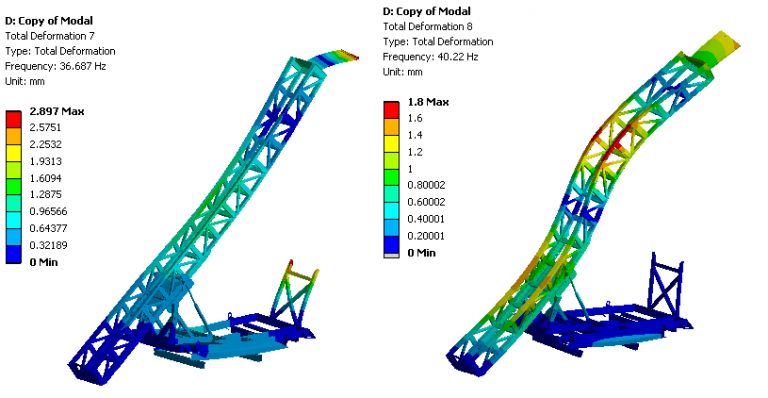
How Finite Element Analysis Works
FEA involves three main steps: preprocessing, solving, and postprocessing.
-
Preprocessing: The object is divided into a finite mesh of elements, and boundary conditions are defined.
-
Solving: The software calculates stresses, displacements, and other variables by solving mathematical equations for each element.
-
Postprocessing: Engineers interpret the results via graphical representations and stress maps.
Advanced FEA platforms allow for nonlinear, dynamic, and multi-physics simulations, making them indispensable in high-performance design environments.
Benefits of Using Finite Element Analysis in Product Design
Using Finite Element Analysis in product design allows for:
-
Predictive Engineering: Identify weak points under load conditions before failures happen.
-
Efficiency Boost: Refine designs for better performance using simulation feedback.
-
Material Optimization: Minimize waste by knowing exactly where material strength is needed.
-
Time Savings: Fewer physical prototypes mean faster development cycles.
From early-stage concepts to final designs, FEA helps reduce both technical and financial risks.
Cost-Effective Product Development Using FEA
Product development is expensive—especially when multiple prototypes are involved. With FEA, designers can:
-
Evaluate various materials and geometries digitally
-
Eliminate trial-and-error in manufacturing
-
Reduce overengineering while maintaining safety
At SIMUDUBLIN , we specialize in cost-effective engineering that aligns with budget targets without compromising on quality or compliance.
FEA for Structural Engineering and Construction
Construction and civil engineering projects require precise load analysis to ensure public safety and regulatory compliance.
FEA allows for:
-
Analysis of load-bearing components like beams, columns, and slabs
-
Simulations for seismic, wind, and load impacts
-
Validation of design standards for codes like ASCE, Eurocode, etc.
Simu Dublin’s expertise supports safe, long-lasting, and code-compliant structures using the most advanced FEA tools.
Improving Product Lifecycle Through FEA
Many industrial components are subject to repetitive or dynamic loads. Over time, this can lead to fatigue failures if not properly designed.
Our simulations help to:
-
Predict fatigue life
-
Identify failure-prone zones
-
Prolong operational lifespan through better design
This lifecycle approach not only increases product reliability but also reduces long-term maintenance costs.
Case Study: Water Tube Boilers and Thermal-Stress Analysis
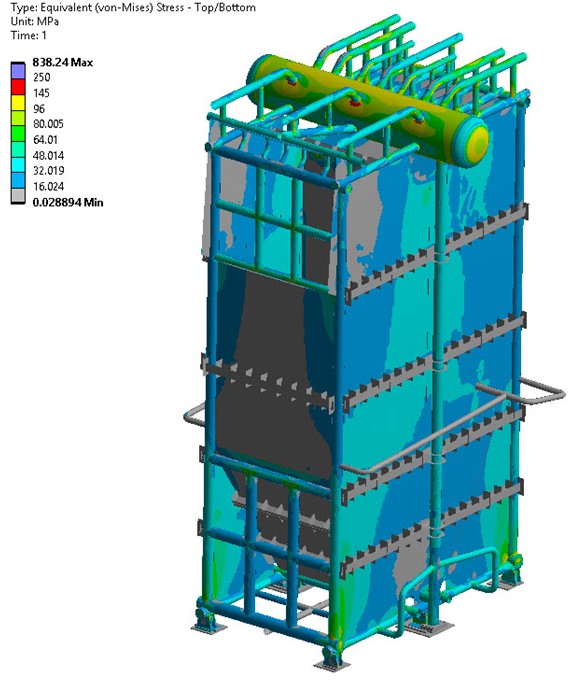
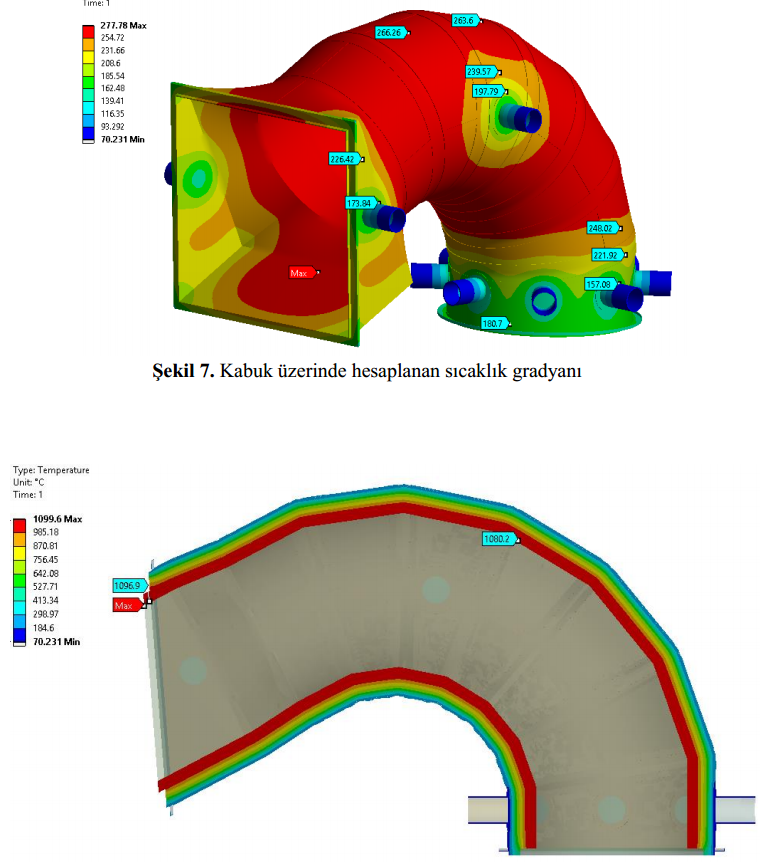
SIMUDUBLIN carried out a thermal-stress analysis for water tube boilers to ensure structural integrity under high-temperature operations.
Our FEA identified:
-
Heat distribution across different boiler components
-
High-stress zones vulnerable to cracking
-
Design improvements to manage thermal expansion
This led to safer, longer-lasting, and more energy-efficient boilers for our clients in the energy sector.
Case Study: Tunnel Damper Pressure Analysis
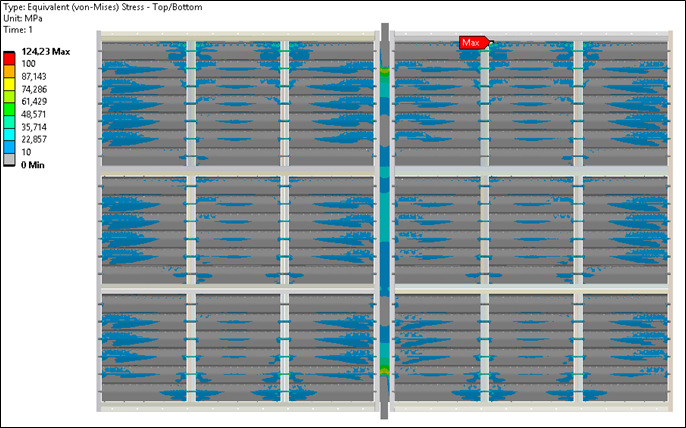
In this project, SIMUDUBLIN conducted static pressure simulations on tunnel dampers under extreme positive and negative pressures.
Key takeaways:
-
Simulation ensured damper structure maintained seal integrity under max load
-
Deformation maps helped engineers redesign for better rigidity
-
Enhanced damper durability under emergency shutdown conditions
FEA was instrumental in meeting transportation safety standards and avoiding costly failures.
Case Study: Drilling Machines and Static Load Testing
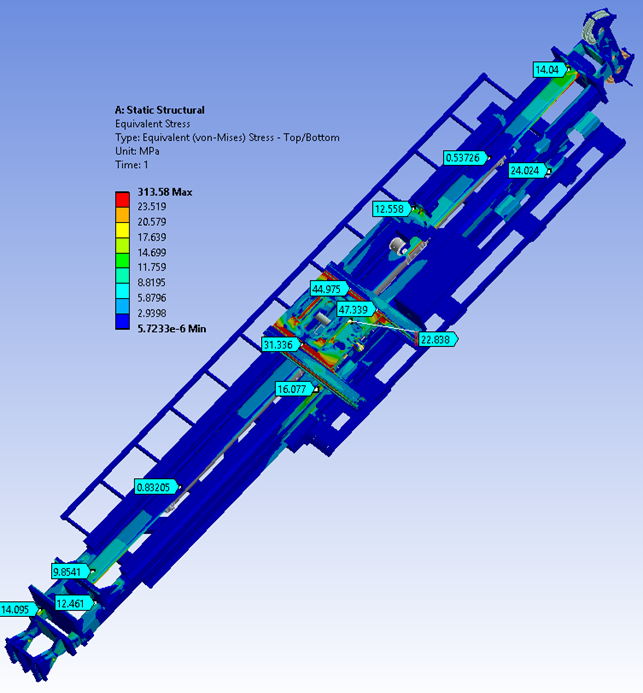
For an industrial drilling machine, SIMUDUBLIN used FEA to analyze the frame under operational loads.
-
Stress concentrations in joints and bearings were identified
-
Deformation patterns informed a redesign to prevent mechanical failures
-
Validation ensured the system met all mechanical safety standards
This resulted in better operational efficiency and lower downtime for our client.
Why Choose Simu Dublin for Finite Element Analysis Services
At SIMUDUBLIN, we bring engineering excellence backed by years of hands-on experience in diverse industries.
What sets us apart:
-
Use of industry-leading software for simulation (ANSYS, SolidWorks, Abaqus)
-
A multi-disciplinary team skilled in mechanical, civil, and thermal FEA
-
Proven success in critical applications—from boilers to dampers and drilling systems
We work with clients from concept to final design validation, delivering cost-effective, reliable, and regulatory-compliant solutions every time.
FAQ Section
1. What is Finite Element Analysis and why is it important?
Finite Element Analysis helps engineers simulate and analyze how a product or structure behaves under real-world conditions. It’s critical for minimizing failure and optimizing designs.
2. How does Finite Element Analysis improve product quality?
FEA allows for early detection of structural weaknesses and helps refine designs to boost performance, safety, and lifespan.
3. Can Simu Dublin handle thermal and structural FEA simulations?
Yes, Simu Dublin specializes in both thermal-stress and structural simulations for complex systems like boilers, dampers, and mechanical machines.
4. What software does Simu Dublin use for Finite Element Analysis?
Simu Dublin employs leading FEA tools such as ANSYS, Abaqus, and SolidWorks Simulation, ensuring accurate and compliant results.
5. Is Finite Element Analysis cost-effective for small businesses?
Absolutely. By reducing physical prototyping and preventing design flaws, FEA offers substantial ROI even for smaller engineering budgets.